
Groceries

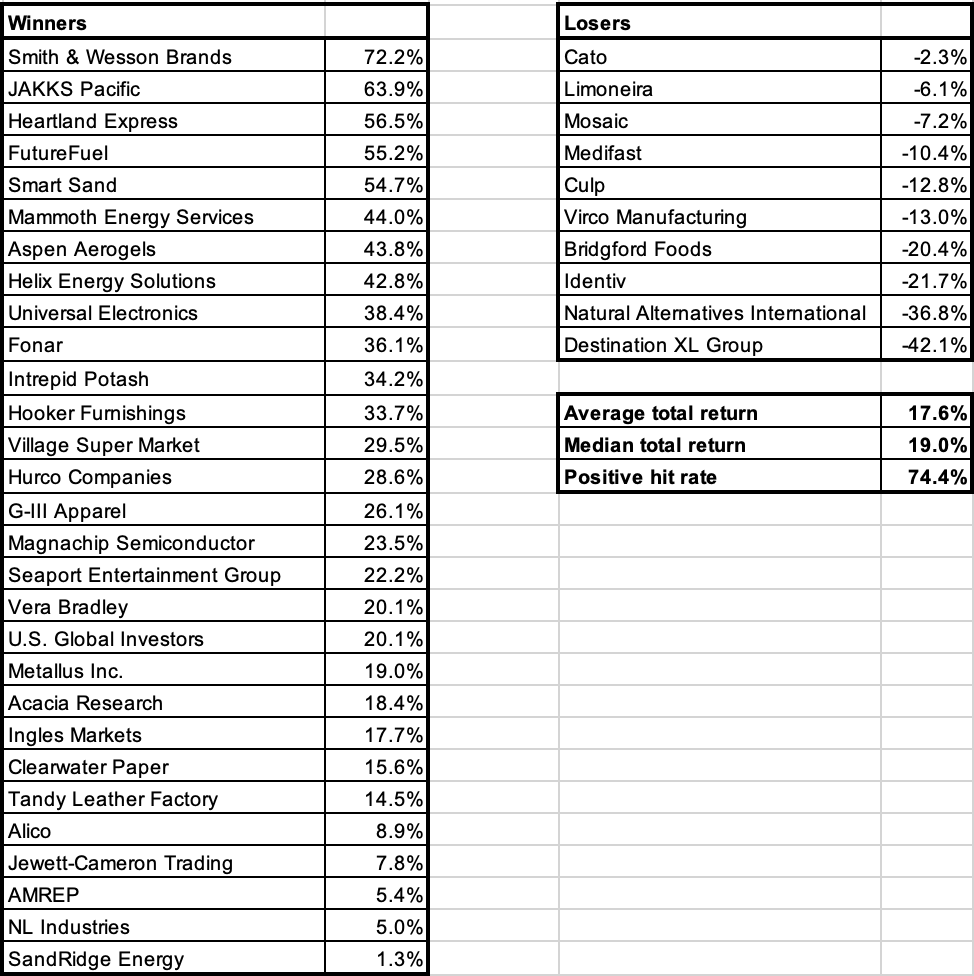
Here is an update on the “Groceries, Not Perfume” stock list on November 28, 2025. Most of the stocks were cheap on tangible assets with low debt relative to equity. Each of the 39 stocks was backtested from December 1, 2025, to July 31, 2026, using portfoliovisualizer.com.
The group’s 17.6% average total return outperformed the S&P 500’s 10.8% and trailed the Russell 2000’s 18.6% over the eight months. Winners averaged 29.6% and losers averaged -17.3%. Positive hit rate was 74.4%.
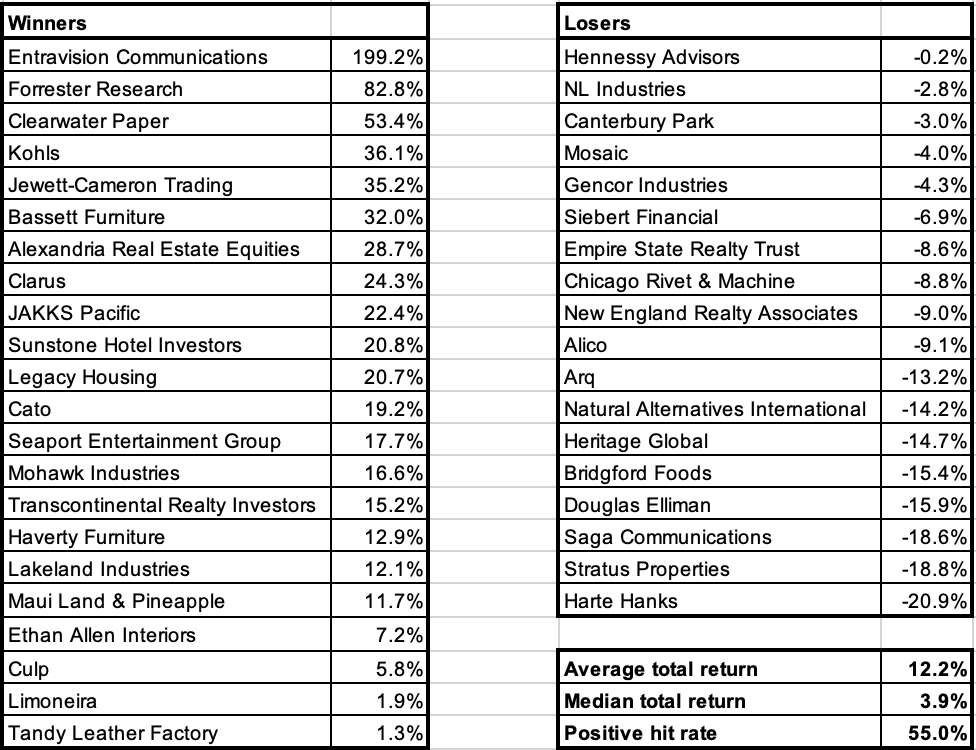
Here’s the 40-stock “Groceries” list from April 23, 2026. Performance is from May 1 to July 31. The group’s average return of 12.2% outperformed the S&P 500’s 3.9% and the Russell 2000’s 4.5%. Winners averaged 30.8% and losers averaged -10.5%. Positive hit rate was 55.0%.
These are short time periods, but I think the lists provided a good starting point for finding value. I arrived at these groups from a larger watchlist of 109 stocks, which can be found below, sorted by the lowest % off 52-week lows. P/B is unadjusted.
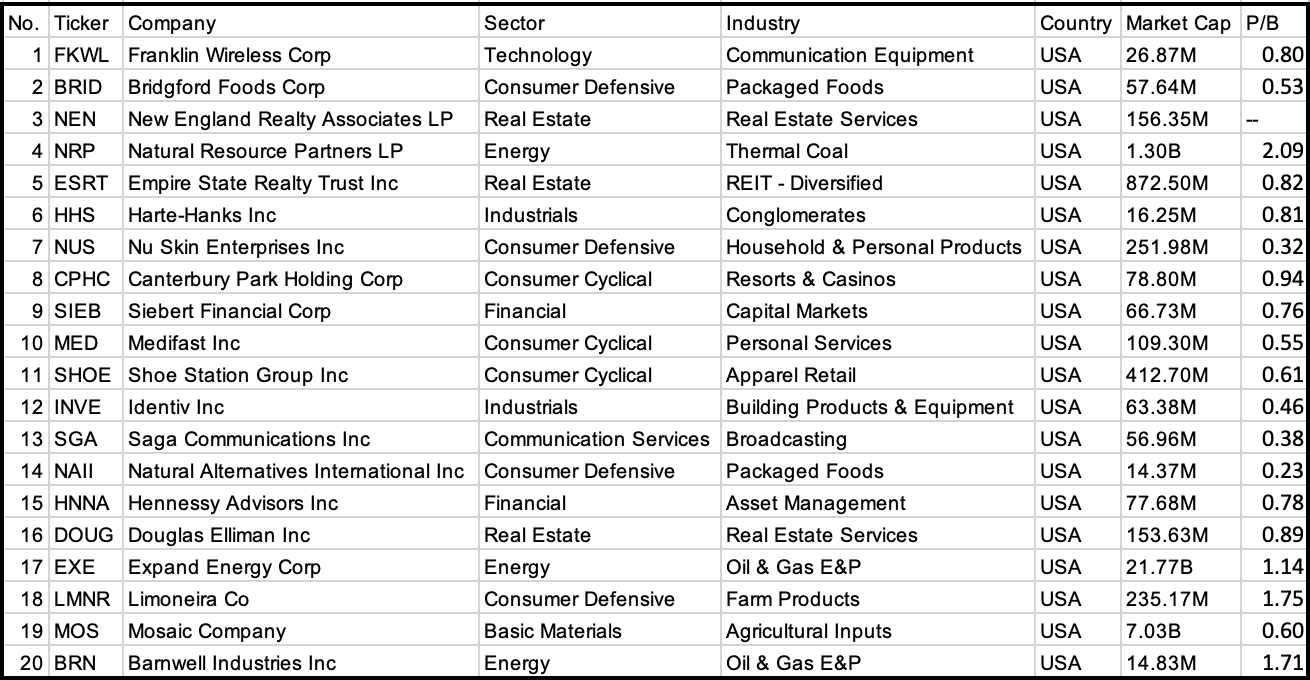
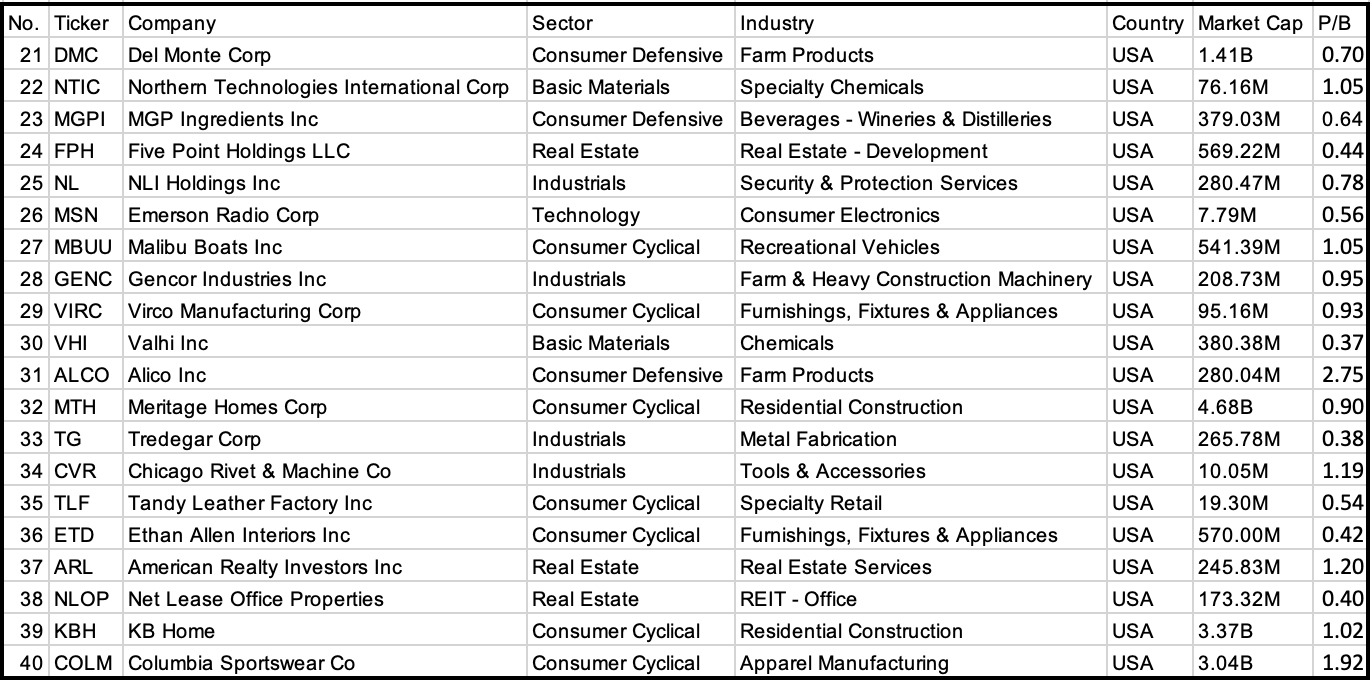
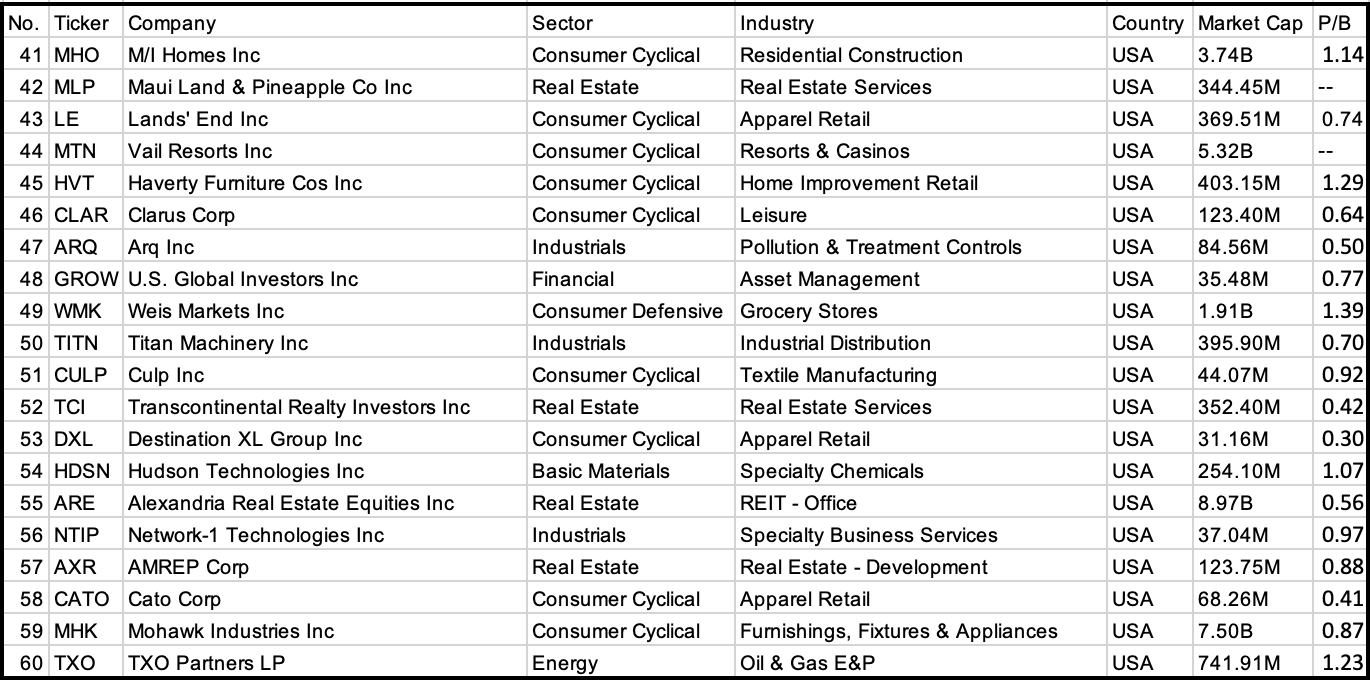
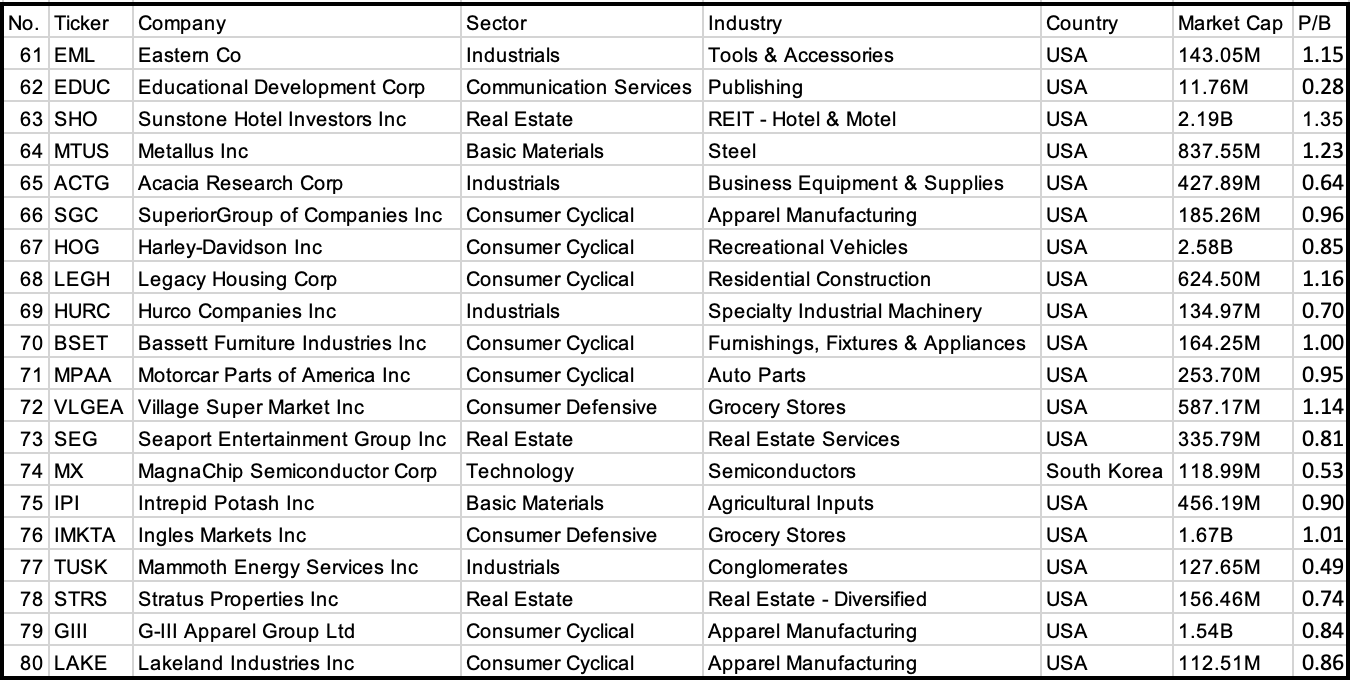
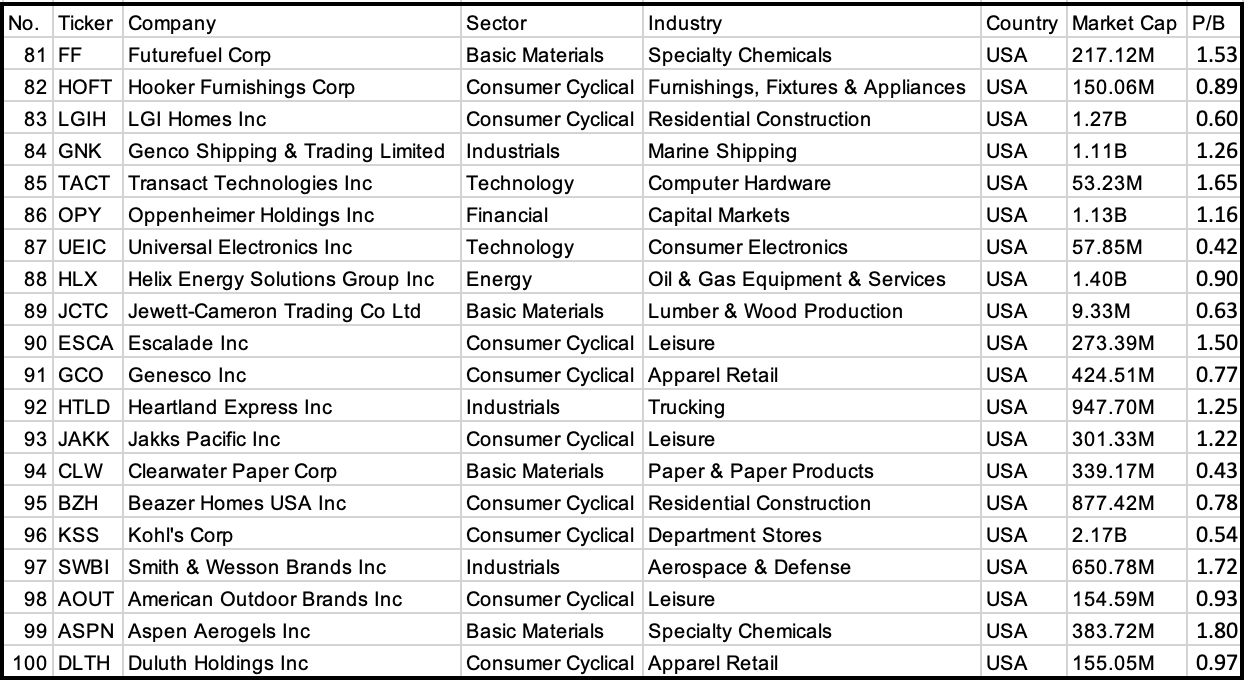
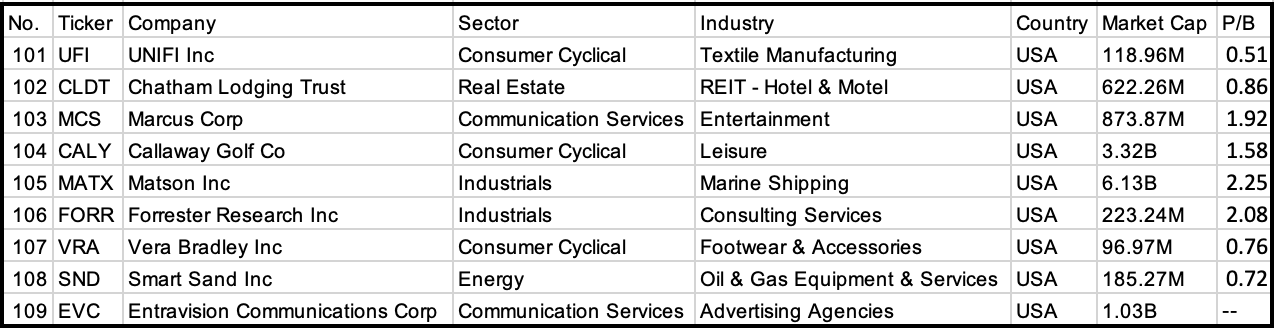
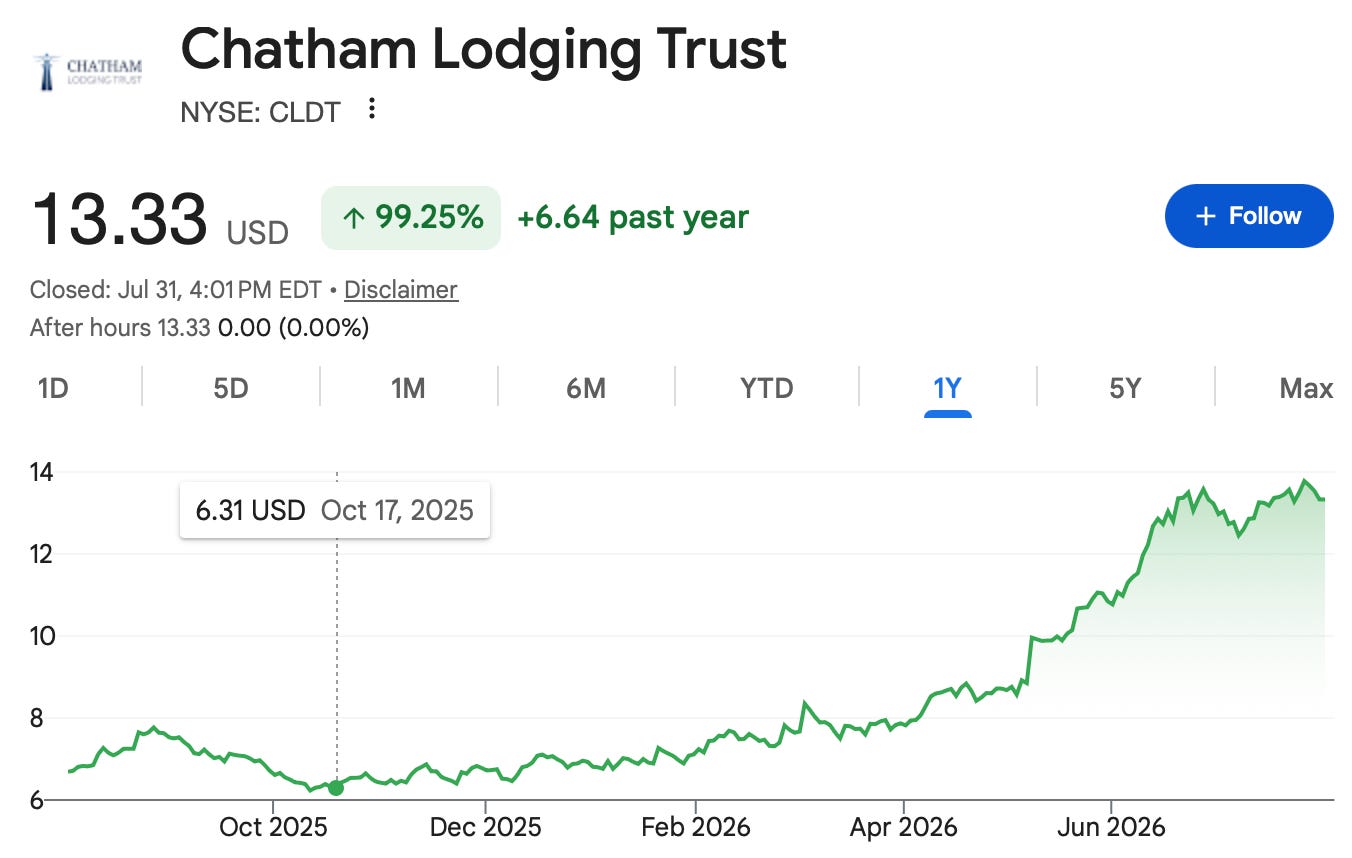
From the table directly above, you’ll notice Chatham Lodging Trust. The stock is up 119.2% from its 52-week low of $6.08 in October 2025. I wrote about the stock that month. The original post is below, short at just 687 words. I think it is a good example of Graham’s “Purchase of Bargain Issues” approach.
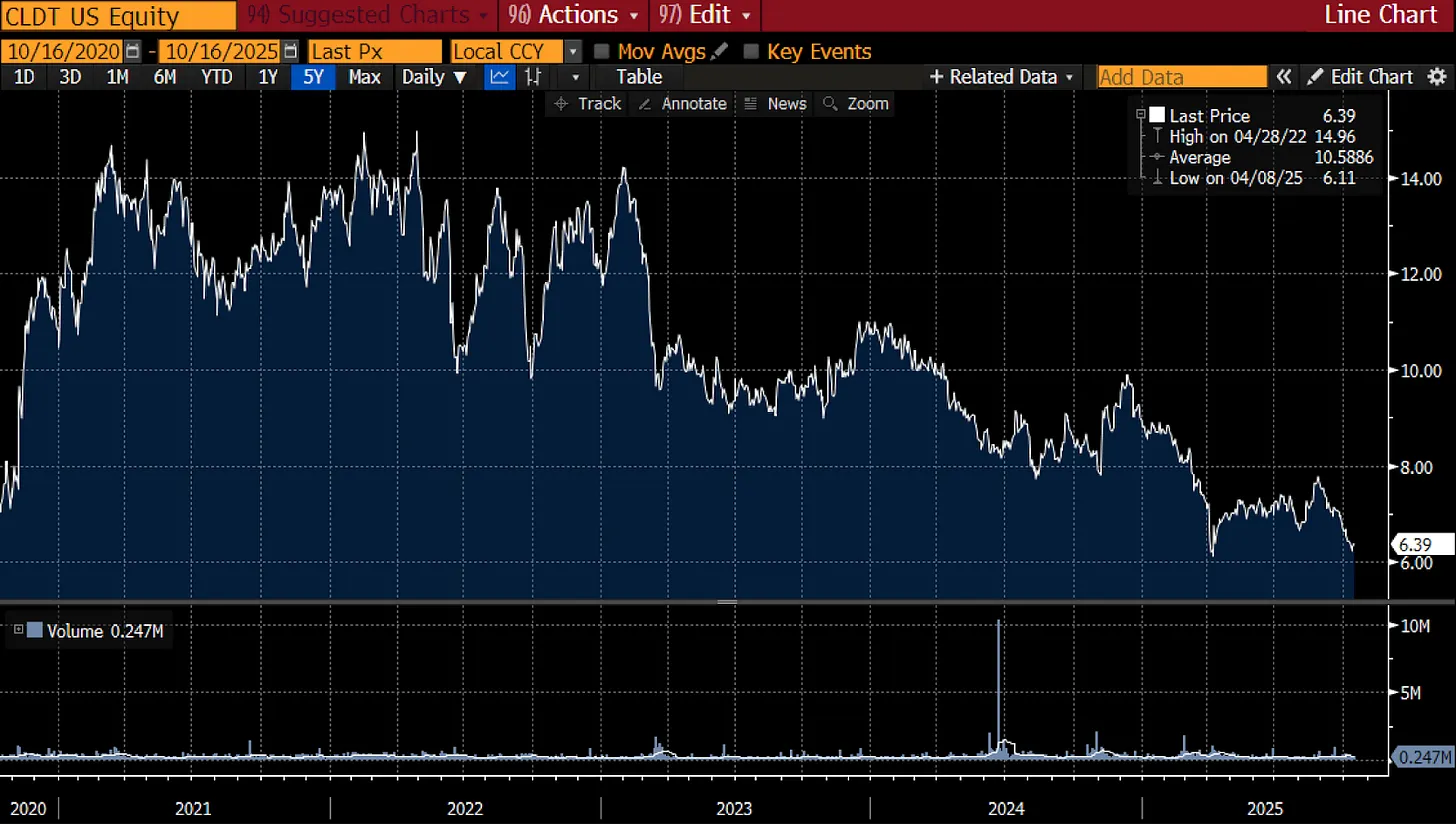
Hotel REITs have performed horribly this year. Operating costs are up, and revenues are down because of an economy that is cooling off. Consumers are still confident but taking on more and more credit to spend; inflation is creeping, and nobody wants to be caught holding super cyclical stocks in a recession.
About a month ago, Chris Darling, the head of US lodging and gaming research at Green Street, cited that he expects industry earnings to decline throughout 2026, but also said “there are meaningful differences across major markets and segments of the industry” and that “San Francisco is among the more notable markets, experiencing a sharp uptick in RevPAR (+9% YTD) coming off an exceedingly low baseline.” Comments like this should have come as a sigh of relief for shareholders of Chatham Lodging Trust, which collects 15% of its EBITDA from the Bay Area.
Instead, the selling continued with Chatham gapping down another 10%, hitting pandemic lows. CLDT now has a market cap of $309.5 million and an enterprise value of $765.6 million, way below its investment portfolio’s book value of $1.14 billion. CLDT’s assets include 34 hotels totaling 5,166 rooms that span 15 states, and last year, with 5,596 rooms and occupancy at 76.3%, they generated net operating income of $136 million and funds from operations of $55.5 million. Silicon Valley, New England, Los Angeles, DC, and Greater NY account for half of CLDT’s cash flows.
Responsible for half of CLDT’s EBITDA is the Residence Inn, and rounding out the rest of their brands are Courtyard, Hampton Inn, Homewood, Hilton Garden, Hyatt Place, and Embassy. All of the hotels are managed by Island Hospitality, an LLC that CEO Jeff Fisher owns entirely. This is, of course, a conflict of interest, but Fisher hasn’t played any games to date. In fact, he’s focused on creating shareholder value. CLDT recently finished selling five hotels that were listed in the fourth quarter for $83 million.
These assets had an average age of twenty-five years and were among the six lowest RevPAR hotels in their portfolio. Using last year’s NOI, the buyers acquired them at around a 6% cap rate, which is lower than their cost of debt. CLDT also has two more hotels listed and plans to use the proceeds from all seven divestitures to fund development, acquire hotels, and repurchase shares.
“We’re always looking. We’re always underwriting. We’re always talking to owners that we’ve dealt with before and/or the brokerage community. I still think there’s a pretty wide kind of bid-ask scenario going on. But I think over time, that gap should lessen. In the meantime, we’ve got our stock buyback program. And we certainly -- as we indicated earlier, probably going to ramp that up just a little bit more given the stock price today.”
Fisher said on an earnings call a couple of months ago. CLDT approved a $25 million repurchase program in May and bought back 20,000 shares at a weighted average price of $7.02 during Q2. CLDT currently trades at 7.2x free cash flow and a cap rate of 17.8%, so the fact that they’re only dipping their toes into buybacks is odd.
Nonetheless, debt is down from $632.0 million to $353.2 million today, net debt/preferred to EBITDA is about 4.5x and they distributed $28.6 million of dividends over the last two years. Management is guiding to $20 million of free cash flow after dividends in 2025. Things are trending in the right direction, yet the stock is trading as if bankruptcy looms.
And, interestingly, Donald Smith & Co., a “deep value equity investing” firm, filed a 13G in August, documenting their 9.8% ownership of CLDT. Donald Smith met Benjamin Graham while studying law at UCLA, and their time together “had an enduring impact on his investment philosophy”. Smith founded DS&C in 1980 and passed away in 2005, but the firm still manages billions and looks to buy stocks at a discount to tangible book value. Here’s a link to their website: https://www.donaldsmithandco.com/about-us.
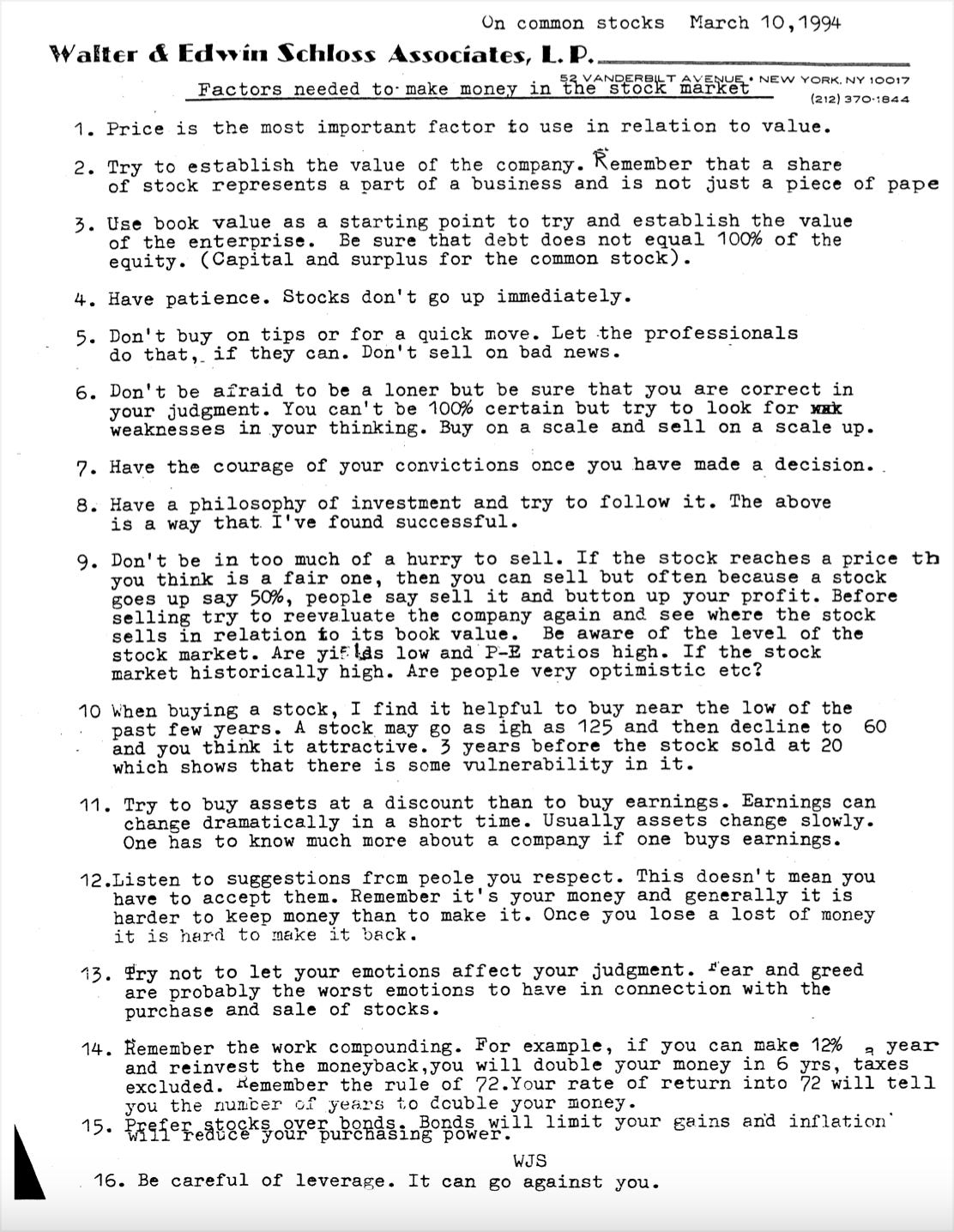
Walter Schloss’s “Factors needed to make money in the stock market”
Fwiw. Chatham Lodging Trust Preferred A shares trade with an 8.14% yield. I've owned a little for about six months.